
Agents4 min
Build Your First AI Agent in TypeScript
A from-scratch walkthrough of the agent loop — tools, reasoning, and termination — using the Claude API and plain TypeScript. No frameworks.
Josh
Field manual · AI engineering
Practical, code-first tutorials on agents, RAG, prompt engineering and shipping LLM apps to production. No hype — just what works.
[ 01 · Featured ]
A from-scratch walkthrough of the agent loop — tools, reasoning, and termination — using the Claude API and plain TypeScript. No frameworks.
[ 02 · Latest ]

How to use AI to plan and execute code migrations reliably — from class components to hooks, callbacks to async/await — without introducing silent regressions.

How to capture, trim, and present compiler errors and test failures to AI coding tools so they fix the right problem — not a plausible-sounding neighbor of it.
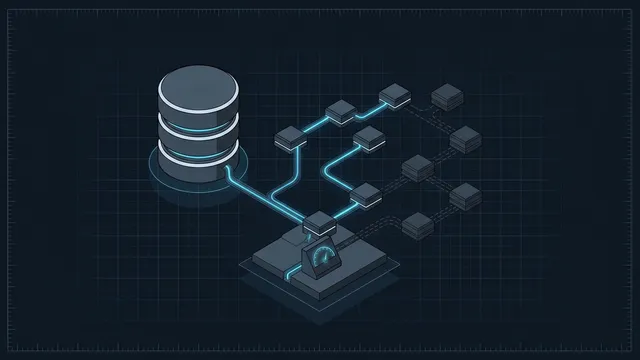
Practical patterns for using AI to write complex SQL — window functions, CTEs, EXPLAIN analysis, and index suggestions — without getting burned by hallucinated columns or the wrong dialect.

How to use AI coding assistants to systematically spot injection flaws, auth bypasses, and insecure defaults — with prompts that actually surface real problems.

How to use AI coding assistants to design, implement, test, and clean up feature flags — concrete prompts for each stage of the toggle lifecycle.

AI defaults to generic patterns from its training data. Here's how to anchor generated code to your existing conventions — with examples, explicit constraints, and a drift-detection review.
[ 03 · Topics ]
Core concepts every AI engineer should internalise first.
02Designing, building and orchestrating autonomous LLM agents.
03Retrieval-augmented generation, embeddings and vector search.
04Reliable prompting patterns for real production systems.
05The frameworks, SDKs and dev tools that ship AI faster.
06Evals, observability, cost and reliability at scale.