Refactoring with AI: A Step-by-Step Strategy for Modernizing Legacy Code
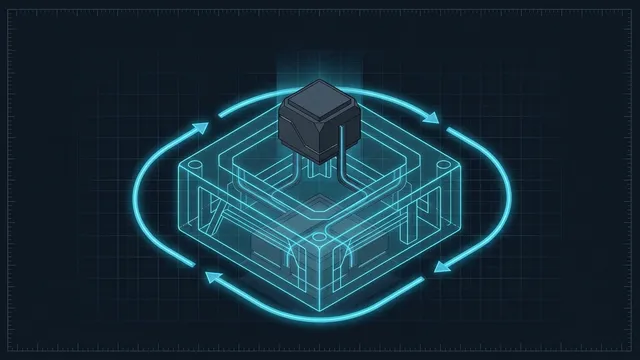
How to use AI coding assistants for safe, incremental refactoring — scoping the work, writing safety tests, reviewing generated diffs, and avoiding common pitfalls.
Page 2 of 2
How to use AI coding assistants for safe, incremental refactoring — scoping the work, writing safety tests, reviewing generated diffs, and avoiding common pitfalls.
How to extend your AI coding assistant with Model Context Protocol servers — connecting it to your database, APIs, and custom tools in about ten minutes.
How to prompt AI coding assistants to generate tests that actually catch bugs — edge cases, failure modes, and boundary conditions, not just happy-path boilerplate.
How to keep AI coding assistants accurate across a long feature branch — when to trim, reset, and summarize context so the model stays focused.
How to structure debugging sessions with an AI assistant — what runtime context to share, how to frame the problem, and how to verify a diagnosis before patching.
A practical checklist for reviewing AI-written code — catching hallucinated APIs, subtle logic bugs, and security gaps before they reach production.
Five battle-tested prompting patterns — structure, examples, decomposition, self-checking, and output contracts — that hold up when real traffic hits.
A practical decision framework for when to reach for retrieval-augmented generation, when to fine-tune, and when to do neither — with the trade-offs that matter.
A from-scratch walkthrough of the agent loop — tools, reasoning, and termination — using the Claude API and plain TypeScript. No frameworks.